
 Nadir On The Go
Transylvania may be synonymous with vampires and werewolves to many, but to anyone who has been there, it is a melting pot of cultures and a place that amazes with its intriguing history and pristine nature. Lying east of the Carpathians, the ‘land beyond the forests’ makes visitors feel they are somewhere beautiful that’s still somewhat undiscovered.

Transylvania is the largest and best-known region of Romania. Once it was a part of Hungary, then it enjoyed independence as a sovereign state for some time and finally, after the First World War, Transylvania became a part of Romania. The complex timeline set the scene for the cohabitations of Romanians, Hungarians and Saxons for centuries, and a rich history of multiculturalism is evident throughout the region. And if nature is what you are after, Transylvania won’t disappoint you either, with its picaresque mountains, valleys, forests and waterfalls.
Now let’s talk about the 9 must-see attractions of Transylvania for your next trip there.
Brasov
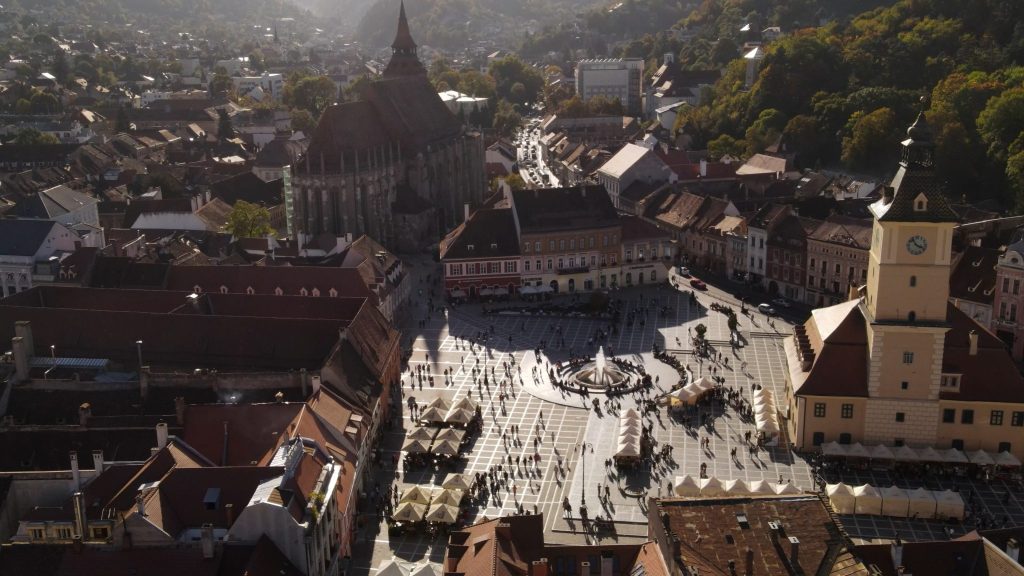
Dated back as far as 1251, Brasov was once the trade center for the Saxons dealing in metalwork, clothes, weapons, and wax. With gorgeous architecture and located in a stunning Transylvanian valley, this city is without a doubt my favorite place in Transylvania and where I have spent the majority of my time during my two trips to the region.
Old town
The Saxon settlers, brought in by Transylvania’s Hungarian rulers, built the Old Town of Brasov. Most of the historical city sights are in here, including the following
- The Black Church: was built as a Roman Catholic church in the 15th century but was burnt by the Great Fire in 1689. The church has three bells one of them weighs 6.3 tons. There is also an organ with 4000 pipes and an impressive collection of Anatolian carpets.
- Muresenilor House Memorial Museum: remembers the life of Andrei Muresanu, the composer of the Romanian National Anthem, and his family members.
- Poarta Schei: is a famous street and taking a walk down it will enable you to enjoy the picturesque Strada Sforii alley, the Beth Israel Synagogue, the Schei & St Catherine Gates.
- St Bartholomew Church: one of the oldest churches in the country, which dates back to 1241.
Schei district
Only Saxons were once allowed to live inside the walled city of Brasov. Romanians and Bulgarians, who were brought in for the labor shortages, lived south to the gate of the Old City in hamlets. Centered on the St Nicholas Church, this part of the city is now a beautiful spot for strolling. If you’re check out the first Romanian School which was the first school where Romanian language was used to teach students.
Accommodation: If you are seeking budget accommodation (like I was), you can stay within the old town in Secret Boutique Hotel. I tried out a few hostels and honestly this was the only good one I found with a combination of nice, comfy beds and a social atmosphere. If you are not a budget traveler you can choose places like Hotel Aro Palace, Radisson Blu Aurum Hotel or Grand Hotel Belvedere. They are well within a kilometer of the city center and have all the luxuries you need to make your stay grand.
Bran Castle (Dracula’s Castle)

Even though this Transylvanian castle is not the real Dracula castle (former residence of Vlad Dracula) as some once claimed, it is still rich with history without any fictional connection to the Wallachian ruler. The breathtaking Transylvanian nature that surrounds the castle makes it my favorite castle I have ever seen. There is a small (five-minute-long) hike you can do to get to the viewpoint to the image, and to to get to this short hike you have to walk past the main entrance for a few minutes (coming from the Bran Bus stop) and then cross a small bridge and clear a field (more details on this on my video from Transylvania if you haven’t watched it). Make sure you don’t stay there after dark. You probably won’t meet Dracula, but are more likely to get a visit from brown bears past sunset. Also if it’s rainy or muddy, be ready to get your shoes and clothes muddy on this hike.
Sibiu Old Town

Known as ‘the Town with Eyes’ because of its houses with windows that look like eyes watching you, Sibiu marvels with its history, architecture and food. Hosting an international airport and also lying close to Fagaras Mountains (a popular trekking route) and Paltiniș and Arena Platoș ski resorts (two popular winter destinations), Sibiu is a great hub for exploring the region around it.
Once in Sibiu, you can’t miss the Great Square, locally known as Piata Mare, while you are in Sibiu Old Town. The picturesque public plaza started as a grain market and in time, became the center for public gatherings, a commercial hub and also served as a place for public executions. While you are in the square, head over to the Council Tower, . For centuries, it had been used as a grain storehouse, a watchtower for fire, a prison for petty thugs, and even as a botany museum. If you climb to the top, you will find an observation deck that lets you enjoy the incredible view over the city that stretches as far as Faragas mountains. It was quite a few stories, but the view from the top was more than worth it for me. The Piata Mare 1 with a three-ridged roof, the Holy Trinity Roman-Catholic Church, Brukenthal Palace, the blue house of Casa Albastra etc are some more of the historical monuments that you can enjoy at Sibiu Old Town.
Accommodation: For budget travelers, PanGeea Hotel, B13 Hotel, FLH – Royal Studios are suitable, although . Non budget travelers will be well-suited in the hotels like Pansuina Alina, Mercure Sibiu Arsenal, Hilton Sibiu. None of the hostel options seemed great to me in this city, so if you have the funds, I would recommend to spend a bit more and get a cheaper hotel room.
Sighisoara

Sighisoara stands on the Tarnava River in Mures county. During the Hungarian rule, in the 12th century, the Hungarian King invited German merchants and craftsmen to make Sighisoara their home and defend the frontier. Thus an exemplary, small medieval city was born. Sighisoara is also a place full of cultural activities throughout the year. Situated on top of a small hill, its old town is the cutest one out of all the cities/towns I visited in Transylvania. It was also the least crowded with tourists.
While you are here, you can check out a few sights that I found worth visiting. One of them is the historic Sighisoara Citadel. It was built in 12th century and a glaring example of intricate Saxon architecture. Amazingly, it is still inhabited. You should also check out the 60 meter tall Clock Tower. This tower was built in 1360, has a museum exhibiting local history and also has a balcony at the top that provides a fantastic vista.
And last but not least, don’t miss the Vlad Dracul House. It is said that Vlad the Impaler was born in this building in 1431 and stayed until he was four. The building has rising cylindrical stone vault. According to some historians, this is probably the oldest house in the city. Nowadays, the house is a medieval-themed restaurant. There is also a small weapon museum on the first floor. Don’t miss out to experience some interesting medieval weapons there.
Transfagarasan Highway

The highway known as the Road 7C to locals starts near Bascov and ends at the junction of Motorway A1 and Sibiu. The cloud-crowned highway is stretched about 90 kilometers. This man-made wonder offers a natural spectacle that includes glacial lakes, sensational mountainous panorama, countless waterfalls and something in the form of unexpected in every turn. On paper, it can be done in a few hours hours. But it can take days if you keep stopping to take a better look at every marvelous spot along the road.
It tones down the harsh alpine conditions in Romania and is dotted with long, winding S-curves, hairpin turns, and sharp descents. From late October until June the road is closed for impassable conditions due to snowfall. The Transfagarasan Highway is not only for the motor heads and there are also trekking and hiking routes in the Faragars Mountains. I would urge you to practice extra caution with the increased sightings of brown bears in the area in recent years. You can hire a vehicle from Brasov or Sibiu and check the road on your own. If you want to hire the vehicle from Bucharest, stay overnight in Brasov or Sibiu, and start your voyage the next morning. Or just leave the driving to the professionals, be a passenger of a hired taxi, relax and enjoy.
Pele’s Castle

A small monastery was made by a Wallachian nobleman in 1690, and soon a well-developed village followed surrounding the monastery. The village and the surrounding wild, untampered beauty attracted Romania’s first king, Charles of Hohenzollern to build a summer residence, and it became Peles Castle.
The transformation didn’t end there. The place soon started becoming a favorite resort for the Romanian rich, who started having their own luxurious holiday abodes in the area. So, lavish hotels, casinos, glitzy restaurants and boutique shops followed. The Palace itself is a breathtaking retreat. It lies in the Carpathians with awe-inspiring nature all around. Stepping inside, you’ll also be greeted with astounding gothic architecture. The intricate attention to details of the craftsmen from the past has made the castle is one of the most stunning in Europe. Add central heating system, lifts, modern plumbing and electric sky lights, and you get one of the best palaces to visit anywhere in the world. It also has a praiseworthy collection of armors, secret passages to get lost, suits made for the Kings, a hall of mirrors, lion sculptures made of stone and everything you can think of in a fairytale castle.
Rasnov Citadel
Rasnov Citadel was mentioned in an official document in the year 1331. Teutonic knights built it as protection against the Tartars. It is different in the way that it offered refuge for long periods in the time of seize. There are 30 houses, a chapel, a school and other buildings inside the fortress. Built in the Carpathian Mountains on a rocky hilltop, it stands 200 meter above the Rasnov town. The installation was later enlarged by the local Saxons. Though it was built in 14th century, it is reported to be the best-preserved fortress in Romania and now a very popular tourist attraction.
Corvin Castle
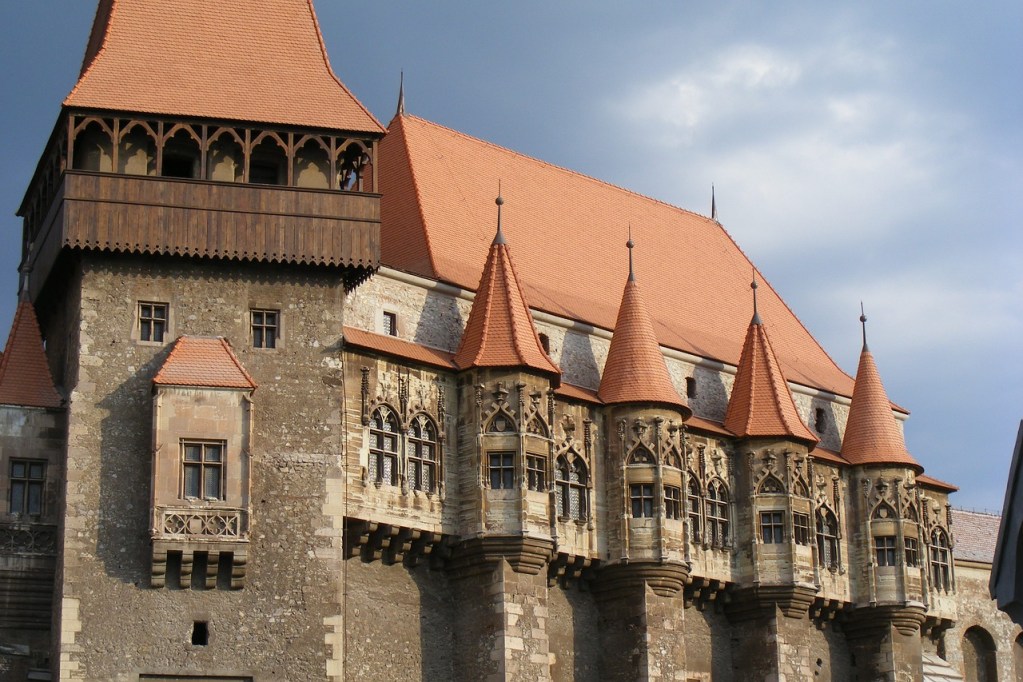
Corvin Castle is one of the largest castles in Romania and was included as one of the Seven Wonders of Romania. It is also known as Hunyadi Castle or Hunedoara Castle. The current state of the castle came to fruition after a fanciful restoration by the government. In 2021 Corvin Castle enjoyed the visits of around 276,000 tourists. Popular fable lets the tourist believe that it is the inspiration behind Castle Dracula of Bram Stoker’s immortal horror Dracula. Though the truth is that Bram Stoker imagined that Castle Dracula was situated in Călimani Mountains near the borders of Moldova.
Turda Salt Mine

Romanian government stopped mining salt from Turda since 1932, after a prolonged period of extraction. Unlike most ancient or unused salt mines, Turda Salt mine now preserves history and provides family entertainment at the same time.
Spreading over nearly 44 square kilometers, it has a depth of 120 meters and is enveloped by dark salt walls. There is an amphitheater for 180 spectators, a museum for contemporary arts, a Ferris Wheel, a bowling arena and a spa treatment facility. Guided paths throughout lead you to fascinating stalagmite formations. There’s even an underground lake that you can navigate with rental boats. Don’t forget to put on warm clothes as the temperature inside is a steady 10 degree Celsius.
Nearest train station to get to Turda is Campia Turzil. From there, you need to take a bus ride to the salt mine. Turda stands on the junction of two major Motorways of Romania. So, it’s comfortably accessible from all corners of Romania.
Final Words
Hope this article should have you covered for visiting some of the most entertaining and must-see attractions of Transylvania. If you are also planning on visiting Bucharest, the capital of Romania, feel free to check out this article for Your Ultimate Guide to Exploring Bucharest.

 Nadir On The Go

3 comments
I wish I would be able to visit this place. One of my dreams.
It’s Peleș castle not Pele’s castle.
Pele has nothing to do with this castle.